
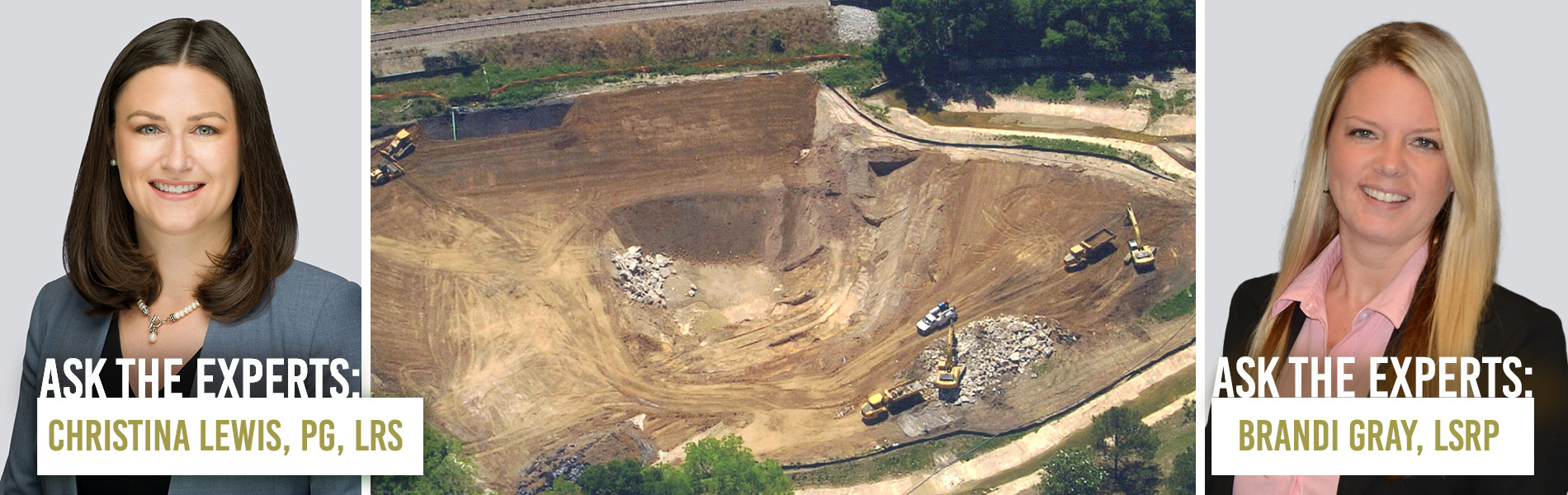
Q&A: Managing PFAS in Soil on Redevelopment Sites
When it comes to PFAS-contaminated soil on redevelopment sites, what are the key cost drivers that project teams should be aware of?
Christina Lewis: Brandi, when it comes to PFAS-contaminated soil on redevelopment sites, what are the key cost drivers that project teams should be aware of?
Brandi Gray: The primary cost driver is disposal classification. If PFAS concentrations exceed regulatory thresholds, especially for PFOA or PFOS, the soil may be classified as hazardous waste, and that instantly shifts disposal from a local landfill, at let’s say, $30 per ton, to a specialized hazardous waste facility, which can run anywhere between $300 to $1000 per ton depending on the location and volume.
Analytical testing is also a hidden but significant cost. Receiving facilities often require PFAS-specific lab results, which can cost anywhere between $500 to $1500 per sample, especially if you’re testing for a broad suite of compounds beyond just PFOA and PFOS.
You also want to look at transportation logistics. If local facilities won’t accept PFAS-impacted soil, you may need to haul it across state lines, triggering additional permitting and, again, dramatically increasing fuel and labor costs.
Finally, there’s long-term liability. Even if a facility accepts the soil, you may still be liable if that material later contributes to groundwater contamination. We’re seeing many developers now conducting preemptive risk assessments and budgeting for contingency disposal funds early in the project lifecycle.