
TSCA PFAS Reporting Rule: Key Updates and Compliance Considerations
Refined Reporting
EPA Proposes Updates to its TSCA PFAS Reporting Rule
The U.S. Environmental Protection Agency (EPA) is adjusting its plan for collecting information on PFAS, proposing updates that could reshape reporting expectations for manufacturers and importers. This effort traces back to Congress’ passing of the fiscal year 2020 National Defense Authorization Act (NDAA), which directed EPA to promulgate a rule requiring companies that manufactured PFAS since January 1, 2011, to submit detailed information.
 EPA finalized its PFAS reporting and recordkeeping requirements pursuant to the 2020 NDAA under the Toxic Substances Control Act (TSCA) Section 8(a)(7) in October 2023. This rule included a one-time reporting requirement for any person that manufactured PFAS or PFAS‑containing articles in the U.S. between January 1, 2011, and December 31, 2022. Under TSCA, “manufacture” explicitly includes importers.
Key Takeaways
- EPA’s TSCA PFAS reporting rule requires manufacturers and importers to submit detailed PFAS-related information dating back to 2011.
- Proposed 2025 rule updates introduce potential exemptions for imported articles, low-concentration mixtures, byproducts, and certain research materials.
- Organizations may face challenges collecting “known to or reasonably ascertainable” data across suppliers, inventories, and historical records.
- Langan’s PFAS and compliance experts help clients streamline data collection, supplier outreach, and reporting strategies aligned with evolving TSCA requirements.
What Does the TSCA PFAS Reporting Rule Require?
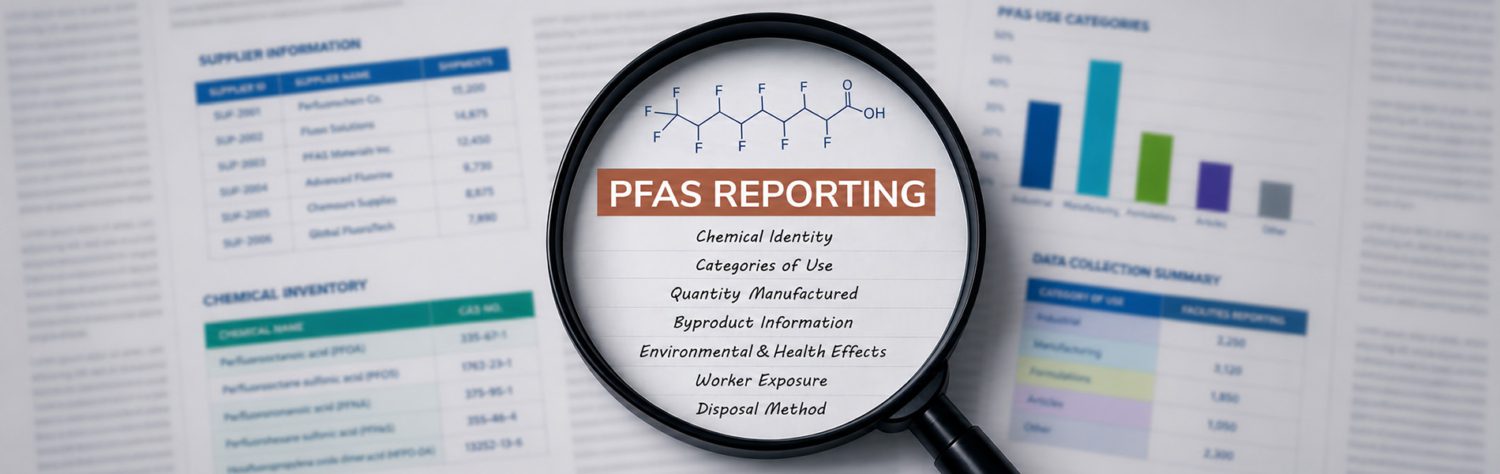
Covered entities must report “known to or reasonably ascertainable” information through EPA’s Central Data Exchange (CDX) electronic reporting site. This information includes:
– Chemical or mixture identity, trade name, and molecular structure;
– Categories of use;
– Quantity manufactured or processed for each category of use;
– Descriptions of byproducts resulting from the manufacture, processing, use, or disposal;
– Information about environmental and health effects;
– Number of workers exposed and the duration of exposure; and
– Manner or method of disposal, including any changes.
This reporting requirement enables EPA to better assess and manage the risks associated with PFAS. Entities should work with suppliers and other business partners to obtain data required under TSCA’s “known to or reasonably ascertainable” due‑diligence standard.
Challenges with PFAS Reporting and Data Collection
For many organizations, this level of reporting presents both logistical and technical challenges, particularly when data is fragmented or dependent on third-party inputs. Langan’s PFAS and compliance experts are helping clients navigate these complexities and establish efficient processes for data collection, supplier outreach, and documentation aligned with TSCA requirements.
Recent TSCA PFAS Reporting Rule Updates
In November 2025, EPA proposed significant changes to the scope of the TSCA 8(a)(7) PFAS reporting rule. The proposed changes incorporate exemptions and modifications to potentially reduce duplicative reporting requirements for manufacturers (including importers).
Proposed Exemptions Under the 2025 Rule Update
Under the current rule, entities that solely process, distribute, or use PFAS and do not manufacture or import PFAS are exempt from reporting. However, the changes proposed in November 2025 include additional exemptions applicable to:
– PFAS manufactured in mixtures or products at ≤0.1%;
– Imported articles;
– Certain byproducts and impurities;
– Research and development chemicals; and
– Non‑isolated intermediates.
EPA is reviewing thousands of public comments in response to the November 2025 update and anticipates issuing a final rule revision later this year.
Updated TSCA PFAS Reporting Deadlines
EPA has also released updates to the reporting timeline. In April 2026, the agency finalized an extension to the TSCA 8(a)(7) reporting period, with submissions now set to begin on January 31, 2027, or 60 days after the final PFAS Reporting Rule goes into effect, whichever is earlier. Most entities will have six months (or, until July 31, 2027) to report “known to or reasonably ascertainable” information through EPA’s CDX. Entities meeting the definition of a “small manufacturer” covered by the TSCA 8(a)(7) PFAS reporting rule will have 12 months to report.
Navigating Evolving TSCA PFAS Reporting Requirements
As the rule evolves, organizations are taking proactive steps to understand their reporting obligations and avoid last-minute challenges. Langan continues to support clients through this process, helping to streamline data collection and evaluation to position companies for efficient, compliant reporting under TSCA standards.
Alan Arico is a Licensed Site Remediation Professional (LSRP) with 20 years of environmental consulting and remediation experience. He provides technical, advisory, and management expertise for a wide array of environmental remediation projects nationwide. He specializes in the design and implementation of environmental site assessments, liability assessments, remediation, brownfields redevelopment, and environmental regulatory compliance. He has worked with a range of industrial and commercial clients, assisting them with regulatory compliance with both state and federal regulations, including EPA’s TSCA.